-
Products
-
Vegetables
- Asparagus
- Bean
- Bell pepper
- Betterave
- Cabbage
- Celeriac
- Celery
- Champignon
- Chard
- Chicory
- Courgette
- Eggplant
- Fennel
- Garden cress
- Jerusalem artichoke
- Leek
- Lettuce
- Onion
- Parsnip
- Peas
- Peppers
- Pumpkin
- Purslane
- Radish
- Rhubarb
- Root parsley
- Round winter radish
- Salsify
- Spinach
- Sprouts
- Sugar bread
- Sweet corn
- Sweet corn
- Sweet potato
- Tomato
- Turnip
- Watercress
- Zucchiolo
- Fruit
- Herbs
-
Vegetables
- Growers
- Inspiration
- Seasonal calendar
- About us
-
More
 Surprisingly fun

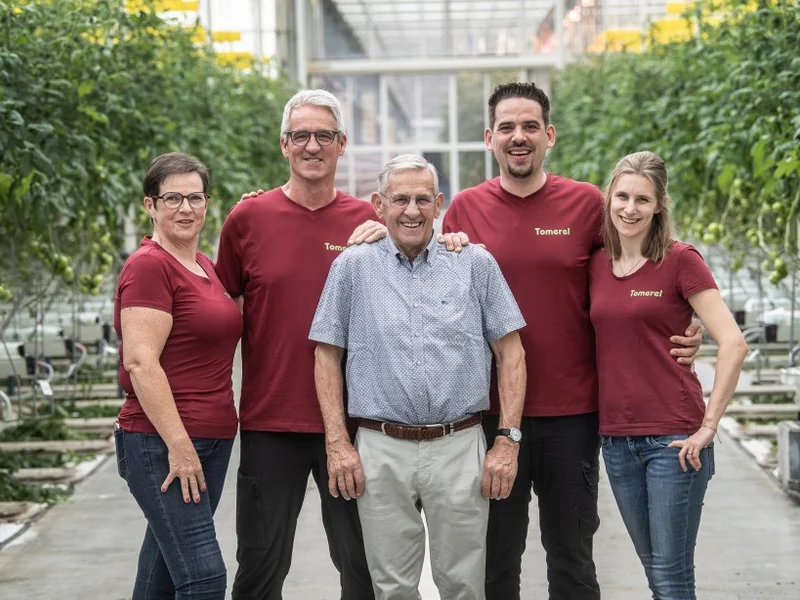
Family Pittoors
About Family Pittoors
Kevin is the fourth generation of the Pittoors family working in agriculture. “My great-grandfather was a farmer and switched to greenhouse cultivation of lettuce and tomatoes towards the end of his career. Since my father’s generation, we’ve been focusing solely on tomatoes.” Fifteen years ago, Kevin’s father started growing multiple tomato varieties to diversify and serve niche markets.
In 2015, Kevin and Chelsey founded Primato together with their fathers. Kevin’s brother Colin has since joined the business too.
Today, they grow two large tomato varieties and five specialities, including Cherrystar and Papritom. In the future, they might try even more varieties, though it’s certainly not straightforward. Each variety has specific needs when it comes to feeding schedules and crop care. With speciality tomatoes, it’s also important to work customer-focused. “The demand for certain products and packaging changes depending on the customer, so we have to stay as flexible as possible,” says Kevin. “The more varieties you grow, the more complicated it gets to give each one enough attention — and we always want to guarantee the quality of our tomatoes.”
Primato cultivates tomatoes on 12 hectares, split evenly between six hectares with artificial lighting and six without. This way, they can supply tomatoes all year round. Before they introduced artificial lighting, winter used to be a quieter period, but that’s no longer the case.
Kevin and Chelsey both love the moment when new plants are planted. “It’s a fresh start for the tomatoes, and it’s great to see,” they say. Kevin also enjoys the very first harvest: “That’s when you see the result of all the time and effort you’ve put in — it’s a special moment.”
One of their biggest challenges is keeping tomato viruses at bay. “Viruses can come in through many ways, so you always need to stay alert and take hygiene measures,” explains Kevin.
Another big focus is their staff. Primato employs many permanent workers, along with a few seasonal workers. Kevin and Chelsey believe it’s important to create a pleasant atmosphere and workplace where people feel comfortable. “We do our best to make our employees feel at ease,” says Chelsey.
The Pittoors family also wants consumers to realise that their tomatoes are a local product. “Awareness has improved in recent years, but many people still don’t know that Belgium produces high-quality tomatoes all year round. BelOrta helps raise awareness, which benefits us too,” Kevin explains. He also notes the growing three-way relationship between the grower, BelOrta and the customer, making cooperation more direct and enjoyable.
On top of quality, Primato focuses on sustainability. They aim to be a frontrunner in the sector, paying close attention to water management and energy efficiency. To combat diseases and pests, they rely as much as possible on natural predators.
To keep innovating, they test around 50 new trial varieties each year to see which plants perform well in their environment. This usually leads to a few new varieties being introduced annually.
In his free time, Kevin enjoys cycling. “It’s the perfect way to relax and clear my head.” Kevin and Chelsey also love eating tomatoes themselves. “Tomatoes are so versatile — we often have them on our sandwiches at lunchtime.”
Their final tip: “Don’t put tomatoes in the fridge — it ruins the flavour. The best way to store them is in a place where it’s around 12 to 16°C, like a cellar or garage.”
Discover more
products

Discover even
more growers
-
Van den Heykant Nursery has been delivering top-quality cucumbers for decades.
-
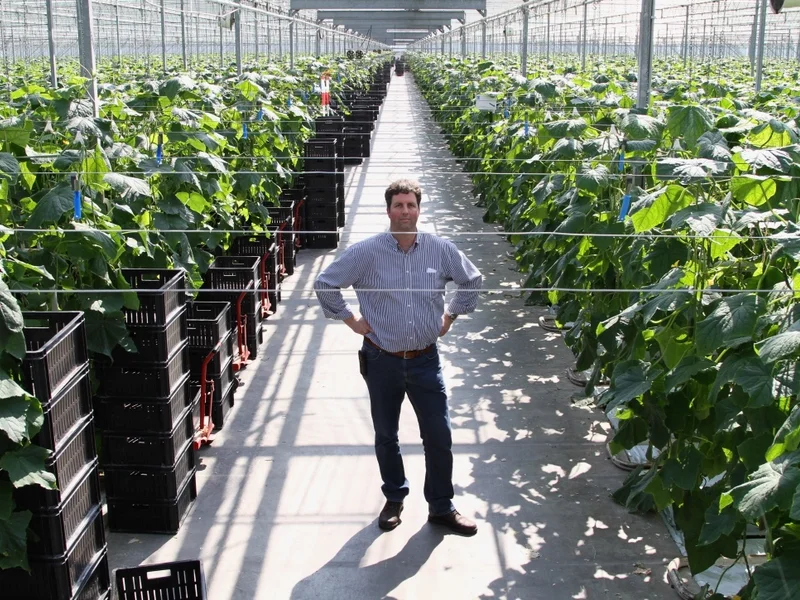
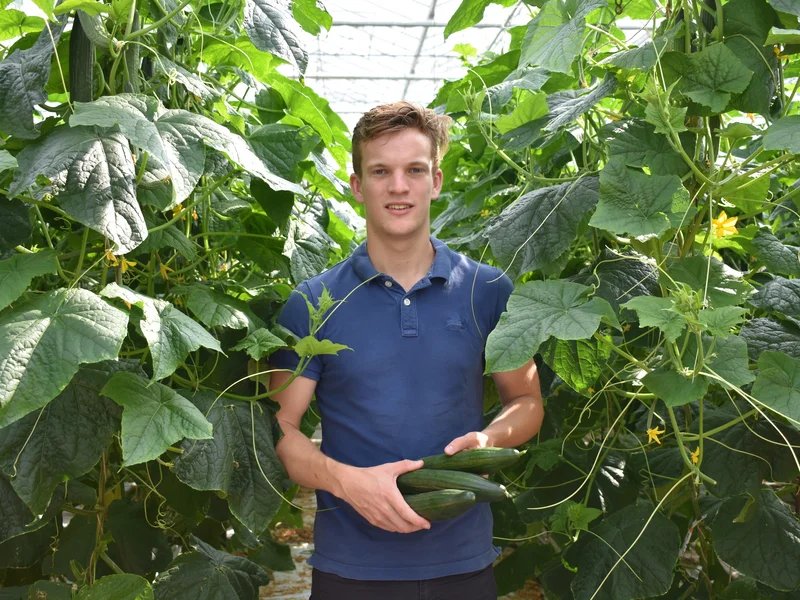
At ’t Bleekerven, Peter Aarts grows cucumbers and tomatoes together with his team. The 11-hectare business was founded...
-
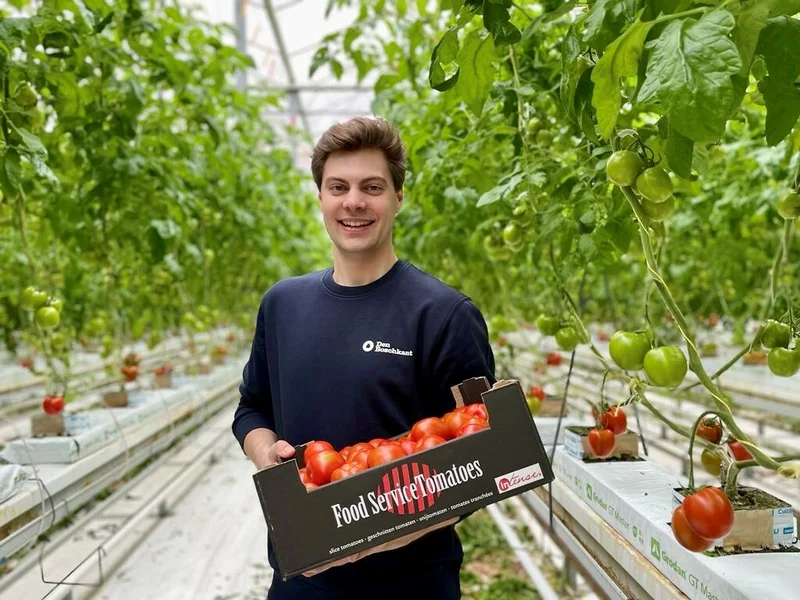
Den Boschkant is a family business founded in 2005 by Marja van Dessel and Leo Verdonck.
-
Tomerel is a cluster tomato farm in Melsele covering 3 hectares, with half of the area used for winter cultivation...